
-

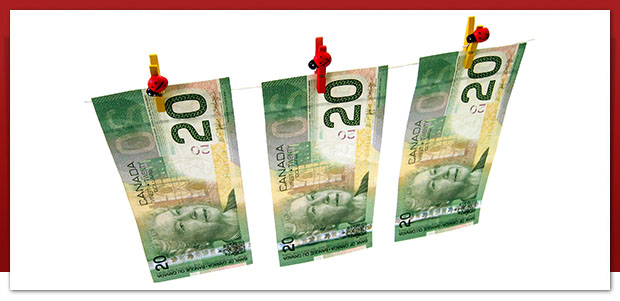
The term "money laundering" is said to have originated with the Italian mafia and such criminals as Al Capone who allegedly purchased 'Laundromats' to commingle (or mix) their illegal profits from prostitution and bootlegged liquor sales with legitimate business sales from the 'Laundromats' to obscure their illegal profit.
What Is Money Laundering?
Money laundering is commonly defined as:
-
“Any act or attempted act to disguise the source of money or assets derived from criminal activity.”
Specifically, money laundering (proceeds of crime) is the method by which “dirty money” received from criminal activities is processed through legitimate businesses and converted into “clean money”. Once cleaned, the money cannot be easily traced to the person originating the transaction or to the criminal origin of the funds. Hence, the criminal can now do what they like with their money.
The Criminal Code of Canada in Section 462.31 (1) defines money laundering (or as it is referred to as “laundering of proceeds of crime”) as anyone who:
" uses, transfers the possession of, sends, or delivers to any person or place, in any manner and by any means, any property or any proceeds of any property with the intent to conceal or convert that property or those proceeds, knowing or believing that all or part of that property or of those proceeds was obtained or derived directly or indirectly as a result of:
-
the commission in Canada of an enterprise crime offence or a designated substance offence* or;
-
an act or omission anywhere that, if it had occurred in Canada, would have constituted an enterprise crime offence or a designated substance offence.”
-
* - Note: “designated substance offence” was repealed, 1996, c.19, s.68
Under Canadian law, a money laundering offence generally requires that the individual knows or believes that the proceeds of crime (money or assets) were derived from the commission of another offence (known as a predicate offence – these predicate offences are generally motivated by profit). Predicate offences for money laundering include:
|
|
|